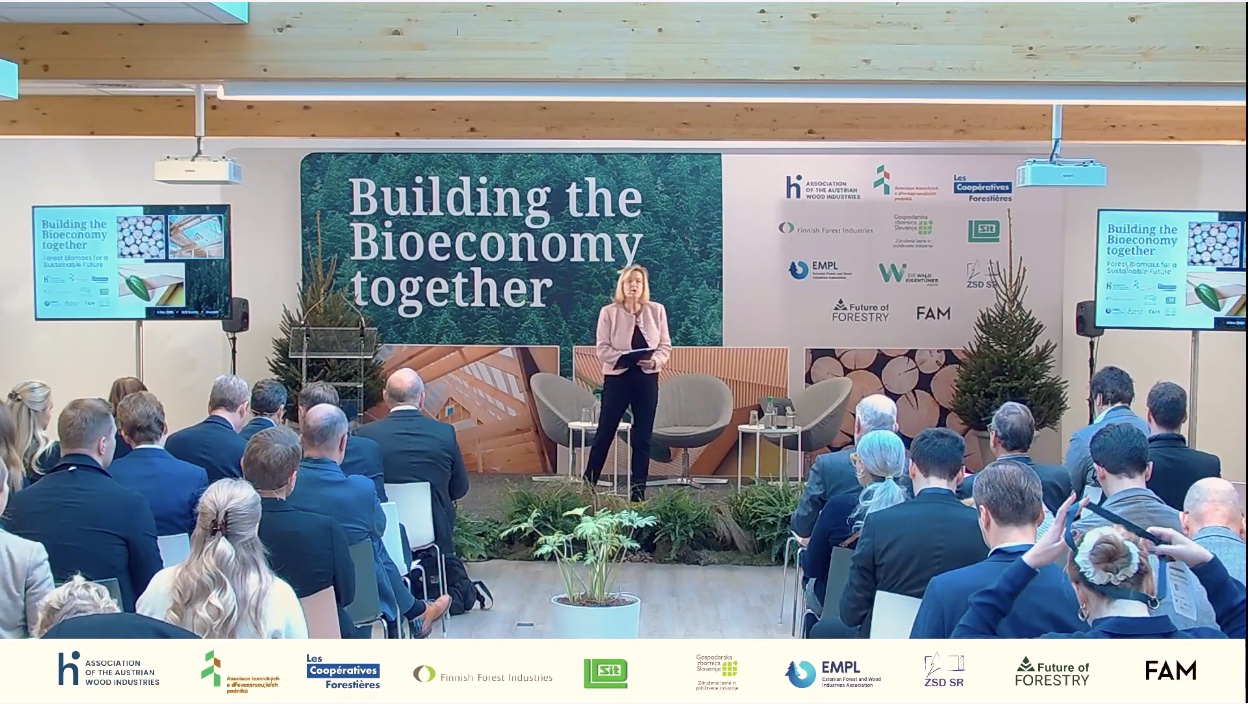
What does it take to build a climate-neutral and globally competitive bioeconomy in Europe? On 21 November, forestry and wood industry representatives from nine EU member states gathered in Brussels for the annual seminar Building the Bioeconomy Together – Forest Biomass for a Sustainable Future, hosted by the European Forest Coalition.
With perspectives from policymakers, forest owners, researchers and industry leaders, the seminar explored how Europe’s forest-based value chain can deliver climate results, industrial resilience and long-term competitiveness.
“The perspective when you’re a forest owner is not a quarter or a year. What we do today, we will benefit from 50 to 100 years from now,” said Håkan Buskhe, CEO of FAM AB. “Despite that, we in the Nordics have built our welfare through forestry. That’s an untapped possibility for other countries around Europe.”
New Report
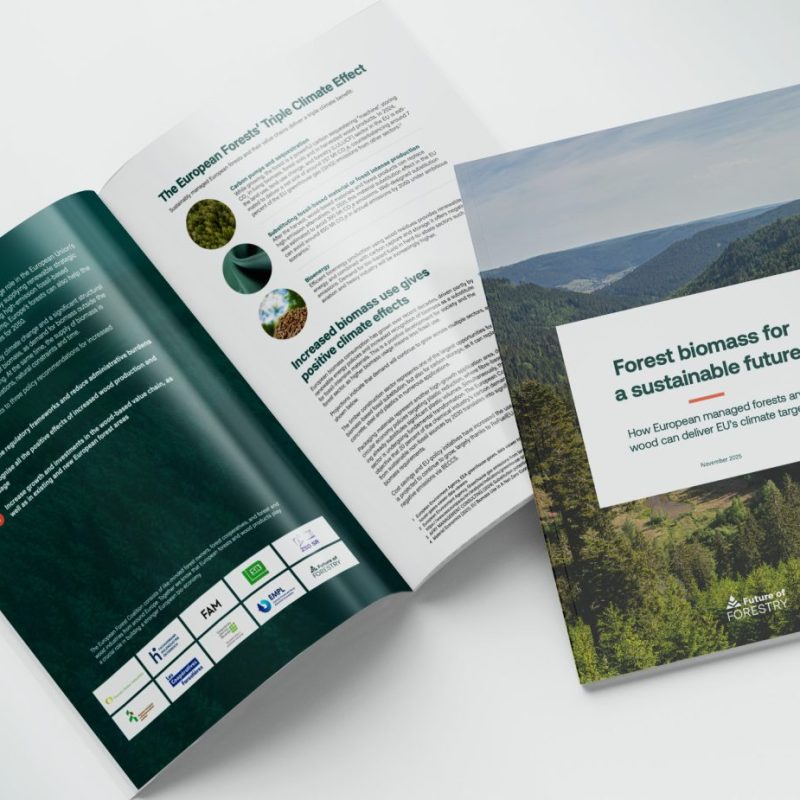
In connection with the event, Future of Forestry released its latest report: Forest Biomass for a Sustainable Future – How European managed forests and wood can deliver EU’s climate targets. Read the report here.
Speakers emphasised that sustainably managed forests, long-lived wood products and efficient value chains already provide tangible climate benefits – storing carbon, substituting fossil materials, and enabling circular production systems. The woodworking industries, with access to growing forests, strong innovation ecosystems and skilled professionals, are ready to lead Europe’s bioeconomic transformation.
“To move towards climate neutrality, we need a strong economy, competitiveness, and we need the forest. The forest can really drive solutions for the future,” said Alexandre Paquot, Director at DG CLIMA. “Biogenic carbon will be critical for the future. So, the forest is a strategic asset for Europe. We need to preserve it, but we also need to make sure that we bring solutions across the value chain.”
”We have all the ingredients to be global leaders in the bioeconomy.
“We have all the ingredients to be global leaders in the bioeconomy,” said Christoph Kulterer, CEO of Hasslacher Norica Timber and board member of EOS. “What we need are predictable, enabling policies that allow industry to invest with confidence.”
However, there was also a clear message from the seminar: new EU regulations, like the Deforestation Regulation (EUDR), must be designed to support, not hinder, sustainable European value chains. Overregulation risks holding back investment, innovation and the green transition itself.